TheraPHIX™, vivoPHIX™, genoPHIX™ and virusPHIX™
RNAssist Blog
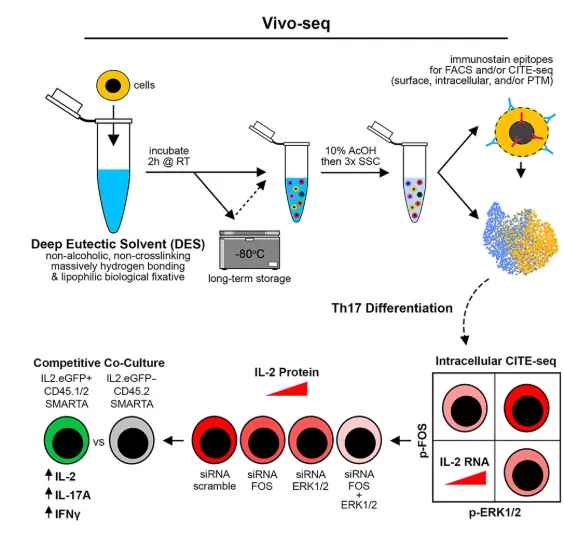 vivoPHIX™-enabled platform published in Cell Reports reveals new insights into Th17 biology
A new study published in Cell Reports (August 2025) demonstrates how RNAssist’s vivoPHIX™ fixative underpins a powerful new technique — Vivo-seq — enabling simultaneous single-c...
Featured ResearchRead More › High-quality single-cell RNA-seq from insect midguts — enabled by vivoPHIX™
Single-cell RNA sequencing relies on clean, intact RNA — but most dissociation protocols for insect tissues involve enzymatic digestion and heat, both of which distort the trans...
Featured ResearchRead More ›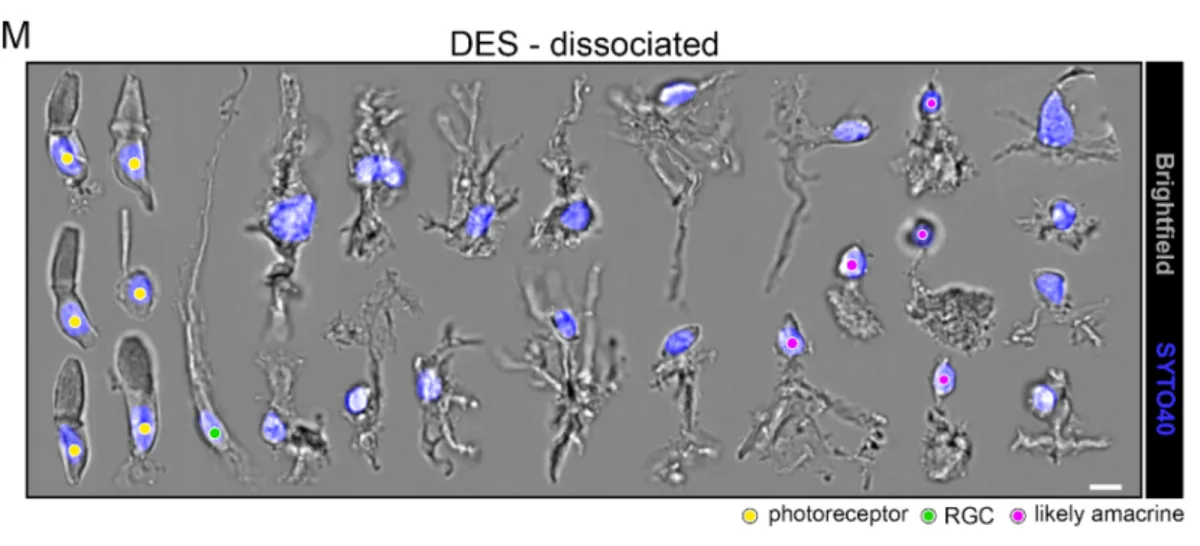 Fixation Before Dissociation Using a Deep Eutectic Solvent Preserves In Vivo States and Phospho-Signaling in Single-Cell Sequencing
Single-cell RNA sequencing presents an opportunity to deconstruct cellular networks but is limited by the loss of biological information. In this study, a new method of fixation...
Featured ResearchRead More › Taking Insect Immunity to the Single-Cell Level
This research paper used the RNAssist’s vivoPHIX™ system to examine the intricacies of insect innate immunity.Sarah Merkling et al., aimed to gain a deeper understanding of the...
Featured ResearchRead More ›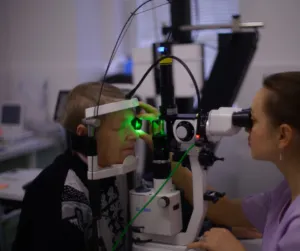 Determination and localisation of Lanosterol Synthase in human cataractous lenses and their relationship with αA crystallin proteins
Dr Avila’s laboratory has used vivoPHIX™ to prepare human cataract crystallin proteins. The study aimed to determine the expression of Lanosterol Synthase in human cataractous l...
Featured ResearchRead More › RNAssist stabilisation reagents published in the Biopreservation and Biobanking Journal (2019) for microbiome analysis
We are proud to have provided RNAssist reagents to the laboratory of Dr. Fay Betsou and Dr. Lorie Neuberger-Castillo at the Integrated Biobank of Luxembourg (IBBL) and pleased t...
Featured ResearchRead More ›Expression of oxysterols in human lenses: Implications of the sterol pathway in age-related cataractsLanosterol is implicated in cataract formation – it has been proposed to help maintain lens transparency by inhibiting the formation of protein aggregates. Their data confirms t...
Featured ResearchRead More ›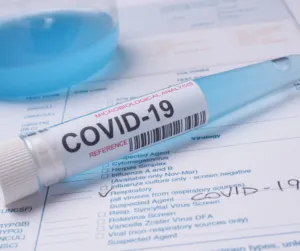 Loop-Mediated Isothermal Amplification Detection of SARS-CoV-2 and Myriad Other Applications
Loop-mediated isothermal amplification (LAMP) has played a crucial role in filling global COVID-19 testing need. ln this study, Moore et al., discuss the use of virusPHIX™ for t...
Featured ResearchRead More ›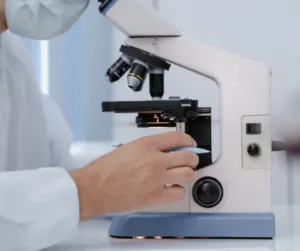 Daily rhythms in gene expression of the human parasite Schistosoma mansoni
Kate Rawlinson at the Sanger Institute, Hinxton, UK used vivoPHIX™ to preserve RNA of the Schistosome parasite for a ‘circadian clock study’. Due to the Earth’s natural rotation...
Featured ResearchRead More ›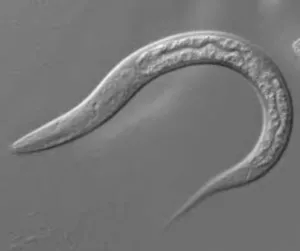 Tools for connectomics in C.elegans
Nicholas Barry at the MIT Media Lab used vivoPHIX™ for preparing nematodes for fluorescence studies in work titled “Tools for connectomics in C.elegans“The simplicity of the 302...
Featured ResearchRead More ›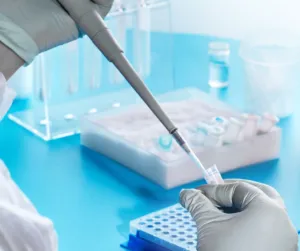 Virucidal efficacy of guanidine-free inactivants and rapid test buffers against SARS-CoV-2
In this paper, Killip et al., (Public Health England) have used RNAssist’s virusPHIX™ reagents to demonstrate SARS-CoV-2 inactivation. We were asked by the UK Department for Hea...
Featured ResearchRead More ›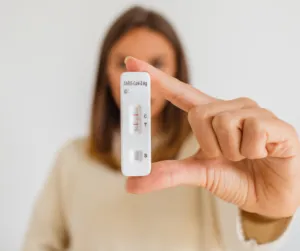 Importance of external quality assessment for SARS-CoV-2 antigen detection during the COVID-19
Mantke et al., demonstrated the use of virusPHIX-P9™ for stablising SARS-CoV-2 Antigen and use by 258 participants across 27 countries for Lateral flow rapid antigen tests, auto...
Featured ResearchRead More ›