
RNA, DNA & Protein Stabilization
the solution to a universal industry problem
vivoPHIX is a patented next generation tissue fixation and biomolecule stabilizer compatible with all biological sample types. vivoPHIX has been tested by over 180 researchers worldwide. It has been proven to stabilise RNA, DNA, proteins and phosphoproteins in viruses, bacteria, parasites, plants and animals including humans. All known sample types including cell pellets, suspended cells, blood, plasma and mammalian tissues are stabilised by vivoPHIX.
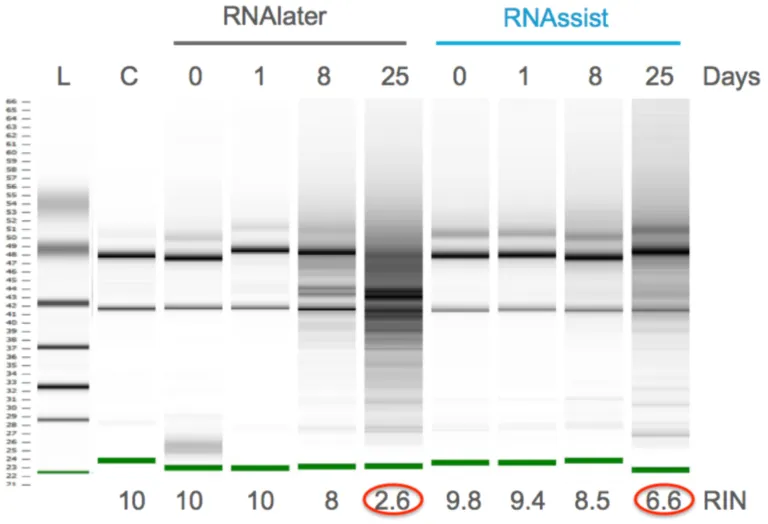
(1) Enhanced RNA Stabilisation Study
Comparison of RNAlater™ vs vivoPHIX stabilised HeLa cell pellets stored for 25 days at 37°C, before RNA extraction (RNeasy, Qiagen) and bioanalyser 2100 (Agilent) analysis. RNA quality as shown by the higher RIN value is superior when cells are stored in vivoPHIX.
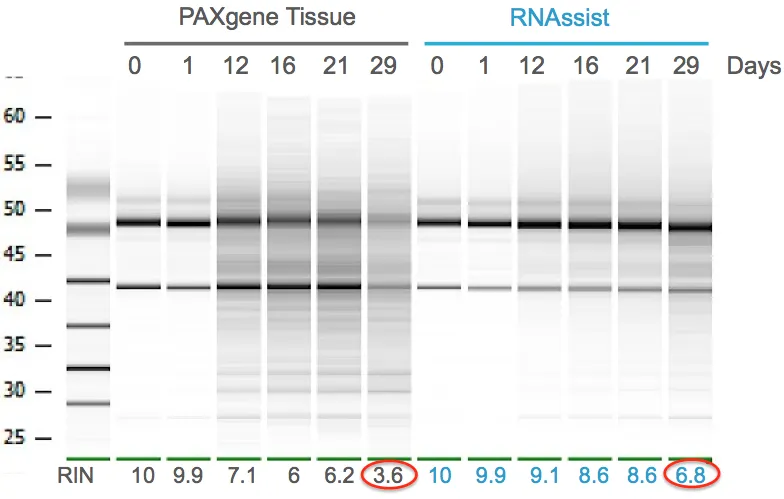
(2) Enhanced RNA Stabilisation Study
Comparison of PAXgene™ vs vivoPHIX stabilised HeLa cell pellets stored for 29 days at 37°C, before RNA extraction (RNeasy, Qiagen) and bioanalyser 2100 (Agilent) analysis. RNA quality as shown by the higher RIN value is superior when cells are stored in vivoPHIX.
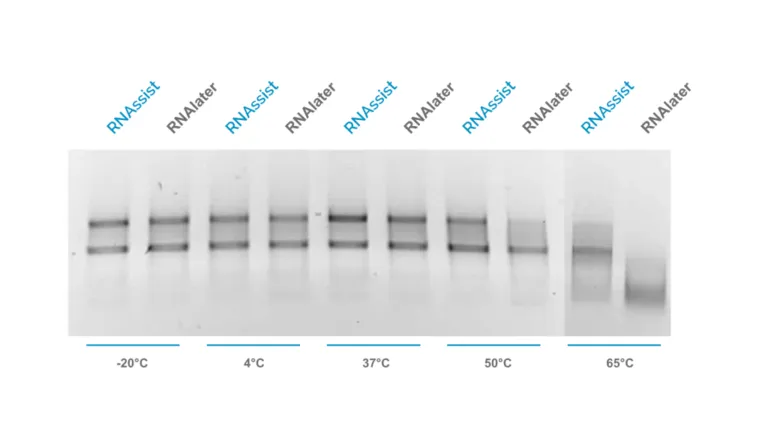
(3) Enhanced RNA Stabilisation Study
Comparison of RNAlater™ vs vivoPHIX stabilised HeLa cell pellets stored at increasing temperatures, followed by RNA extraction (RNeasy, Qiagen) and bioanalyser 2100 (Agilent) analysis. RNA quality is superior when cells are heated in vivoPHIX.
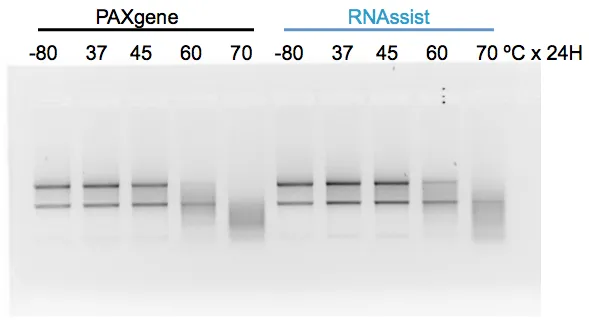
(4) Enhanced RNA Stabilisation Study
Comparison of PAXgene™ vs vivoPHIX stabilised HeLa cell pellets stored at increasing temperatures, followed by RNA extraction (RNeasy, Qiagen) and bioanalyser 2100 (Agilent) analysis. RNA quality is superior when cells are heated in vivoPHIX.
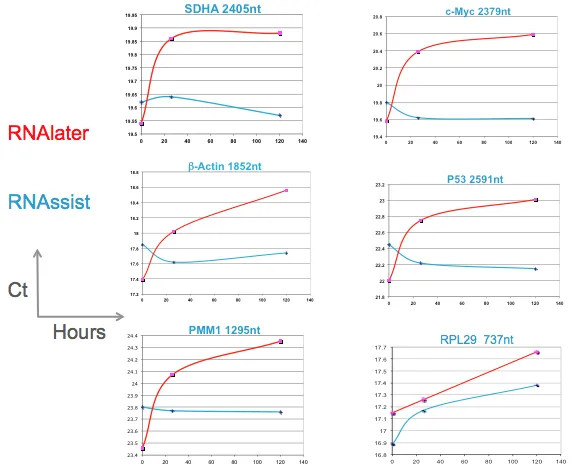
(5) Enhanced RNA Stabilisation Study
Comparison of RNAlater™ vs vivoPHIX stabilised HeLa cell pellets stored at 37°C for 120 hours, followed by RNA extraction (RNeasy, Qiagen) and RT-qPCR analysis. The Ct values, reflecting the integrity of the target mRNA are much more stable with the vivoPHIX treated sample.
(6) Enhanced RNA Stabilisation Study
Compatibility between vivoPHIX stabilised tissue culture cells & miRNeasy/QIAcube purification, days shown at 23-24°C (RIN and RNA yields). Thanks to Dr. S Bartsch, Fraunhofer, Germany.
(7) Enhanced RNA Stabilisation Study
Comparison of RNAlater™ vs vivoPHIX stabilised HeLa cell pellets stored at 37°C for 29 days, followed by gDNA extraction and long-PCR analysis using a 1kb, 3.5kb and 7.5kb amplicons. gDNA samples extracted from vivoPHIX stabilised cells had superior PCR template activity.
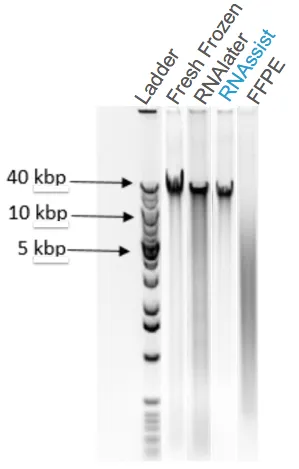
(8) Human Clinical Genomic DNA Stabilisation Study
Following storage for 1 day, gDNA was extracted from fresh-frozen (-80°C), RNAlater (24°C), vivoPHIX (24°C) or FFPE (24°C) treated human colon sample and analysed by gel electrophoresis and ethidium bromide staining. The molecular weight of the vivoPHIX treated sample was similar to fresh-frozen (snap-frozen in liquid N2). Thanks to Bill Mathieson, IBBL.
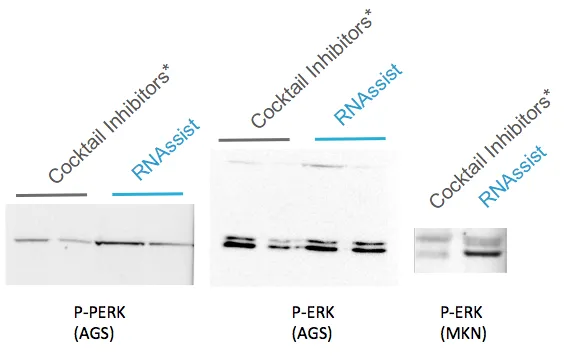
(9) Phosphoprotein Stabilisation Study
MKN or AGS cells were treated directly on the tissue culture plate with either a cocktail of phosphatase inhibitors (mixture of P0044, P5726 Sigma Aldrich) including a Protease inhibitor, or vivoPHIX, followed by protein extraction using ProteoJET (Cosmobio) prior to SDS-PAGE and Western blotting with anti-phosphoprotein (P-PERK or P-ERK) antibodies. Phosphoprotein (P-Ser and P-Thr) stabilisation was equivalent using either the cocktail or vivoPHIX.
Join the RNAssist Community - with 300+ evaluators worldwide
vivoPHIX™, genoPHIX™, virusPHIX™ and virusPHIX-P9™ are patented next generation cell and tissue fixatives, biomolecule stabilisers with powerful virus and bacterial inactivation properties.
Our reagents are universally compatible with all sample types including viruses, bacteria, fungi, parasites, plants and animal cells and tissues. Both liquid and solid samples are rapidly and completely rendered fixed, stabilised and inactivated.

RNAssist technology supports a wide range of life science applications, including tissue fixation and dissociation, single-cell multiomics (scRNA-seq, CITE-seq), and virus inactivation and transport for enhanced diagnostic testing.
Follow us on LinkedIn or email us contact@rnassist.com
© RNAssist | www.RNAssist.com