
Blog
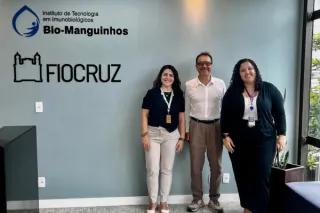
RNAssist and Fiocruz collaborate on TheraPHIX™ project in Brazil
RNAssist collaborates with Fiocruz and Bio-Manguinhos in Brazil on TheraPHIX™, an RNA stabilisation platform that enables liquid-stable mRNA-LNP vaccines effective at ambient temperatures, reducing co... ...more
News
November 07, 2025•1 min read

RNAssist at the RNA Vaccines and Therapeutics Conference 2025
RNAssist CEO Andrew Goldsborough will attend the RNA Vaccines and Therapeutics Conference in London, 23–24 September 2025, to share TheraPHIX™, a stabilisation technology enabling RNA vaccines and the... ...more
Events
September 23, 2025•1 min read
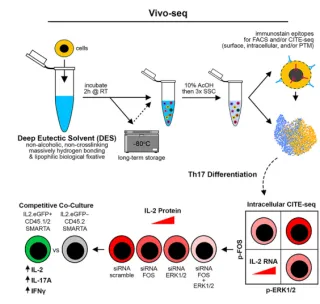
vivoPHIX™-enabled platform published in Cell Reports reveals new insights into Th17 biology
A Cell Reports study showcases how vivoPHIX™ enables simultaneous single-cell RNA and phospho-signalling analysis, uncovering dynamic Th17 states with implications for immunology, diagnostics, and bey... ...more
Featured Research
July 30, 2025•2 min read
High-quality single-cell RNA-seq from insect midguts — enabled by vivoPHIX™
New protocol from NIAID researchers uses vivoPHIX™ to stabilise RNA at the point of collection — enabling clean, high-quality single-cell sequencing from insect tissues without enzymes, heat, or cold ... ...more
Featured Research
July 20, 2025•1 min read
We're attending the UK Clinical Vaccine Network Conference 2025
Dr Andrew Goldsborough will be presenting "TheraPHIX™ technology for ambient temperature liquid-stable mRNA-LNP therapeutics and vaccines" at 15:45 on 12th June 2025 ...more
Events
June 10, 2025•1 min read
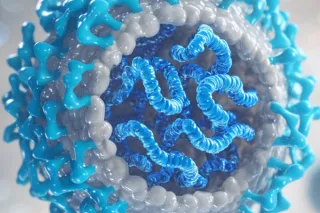
TheraPHIX™: Enabling global vaccine equity with thermostable RNA formulations
The rapid development of RNA vaccines during the COVID-19 pandemic saved millions of lives. However, one major challenge remains: RNA degrades quickly when exposed to heat, enzymes, or physical stress... ...more
News
January 31, 2025•2 min read
vivoPHIX™ is a universal platform technology for preparing higher quality single cells for scRNA-seq (patent pending). The technology enables the immediate stabilisation of the transcriptome at the point of sampling, tissue fixation, cell dissociation, pathogen inactivation and qualitatively improved scRNA-seq results. Advantageously, either entire pieces of tissue or single-cells can be stored and transported prior to further use and scRNA-seq analysis.
vivo PHIX ™ Dissociation Protocol
The combination of a novel mechanical methodology with a non-enzymatic, non-aqueous tissue dissociation buffer fully protects the integrity of nucleic acids and proteins from the initial point of sample fixation throughout the entire dissociation procedure providing high quality single-cells for scRNA-seq.
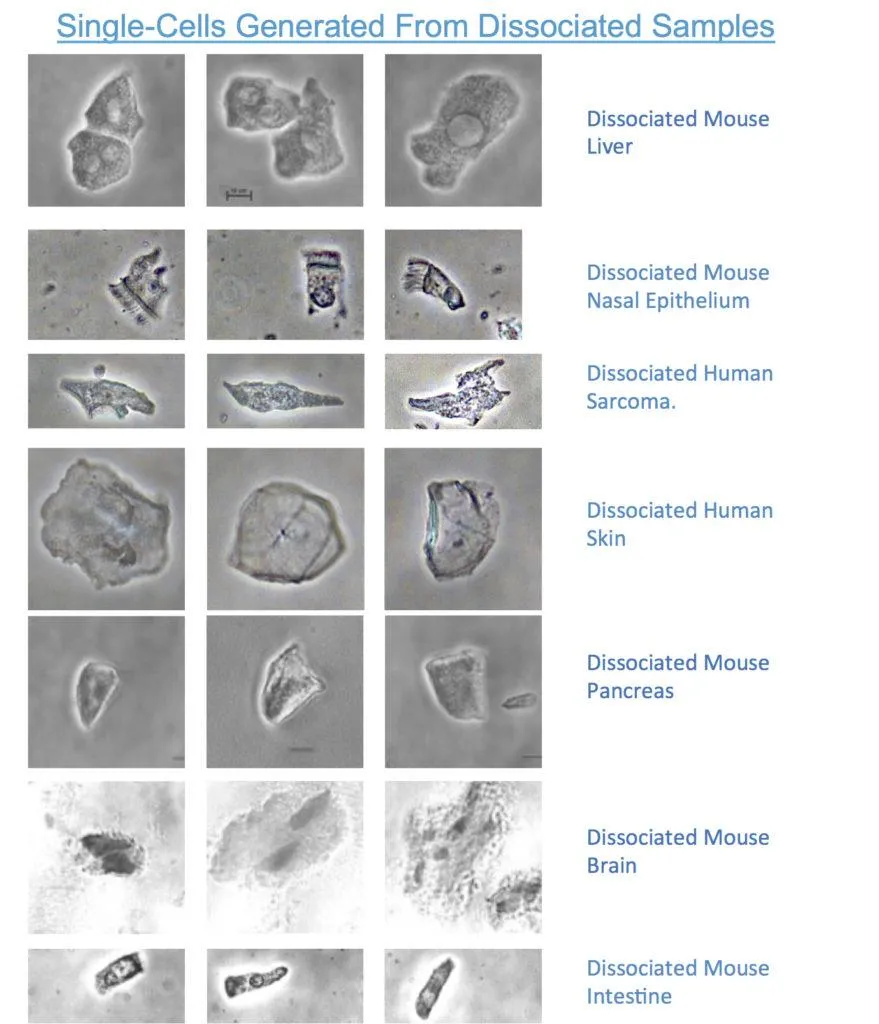
Leading academic laboratories, including the Sanger and Pasteur Institutes have demonstrated that a broad range of tissues types including insect (mosquito) and mammal (mouse and human) can be efficiently processed into single cells.
Tissue dissociation has been demonstrated for intestine, nasal epithelium, kidney, liver, pancreas, skin and a PDX sample. Unprecedentedly, such dissociated cells retain their original morphology such as 3D shape, brush borders and dendrites, providing a means to select cells based on in vivo shape, as well as providing metadata for scRNA-seq and other downstream molecular analytical techniques.
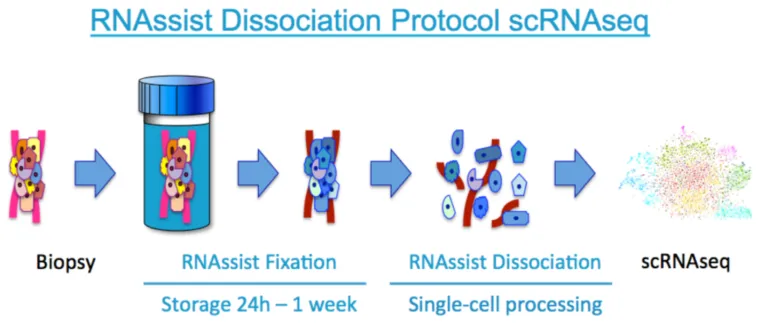
vivo PHIX ™ Dissociated Cells Retain Their Morphology And Biomolecule Integrity
The combination of a novel type of efficient mechanical dissociation, protective buffer and simplified cellular capture reduces cell clumps, doublets and cell debris. Because the cellular transcriptome is immediately stabilised by vivoPHIX at the point of sampling (e.g. fresh biopsy) and retains the protective environment until single-cells are captured and transferred into the aqueous scRNA-seq front-end buffer.
We believe that a great deal of the original in situ cellular morphology is retained during tissue dissociation leading to cells with unique morphologies potentially providing unique insights distinguishing healthy from diseased tissues.
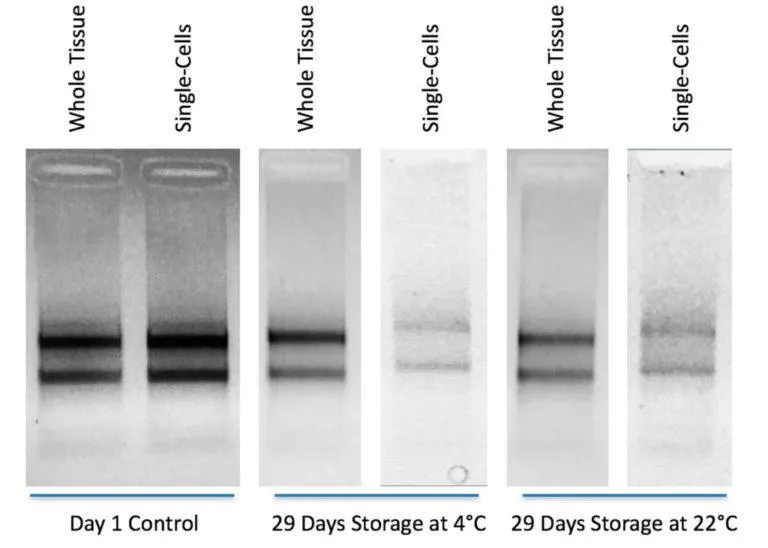
vivo PHIX ™ Stabilisation Of The Liver Transcriptome In Bulk Tissue Or Single-Cells
Total RNA was extracted (RNeasy, Qiagen) from bulk liver tissue immediately after a 2 hour fixation period. A second portion of the bulk tissue was then stored at either 4°C or 20°C for 29 days before RNA extraction. A third portion of the liver tissue was dissociated with the vivoPHIX dissociation protocol (patent-pending) and the single-cells stored at either 4°C or 20°C for 29 days before bulk RNA extraction on the single-cells. Gel electrophoresis of the RNA demonstrates that RNA degradation of the single-cells and bulk liver was minimal. This demonstrates that it is technically possible to store single-cells until such a time as is appropriate to run a scRNA-seq experiment, opening up the possibility of running multiple samples together rather than on a one-by-one as available basis.
Join the RNAssist Community - with 300+ evaluators worldwide
vivoPHIX™, genoPHIX™, virusPHIX™ and virusPHIX-P9™ are patented next generation cell and tissue fixatives, biomolecule stabilisers with powerful virus and bacterial inactivation properties.
Our reagents are universally compatible with all sample types including viruses, bacteria, fungi, parasites, plants and animal cells and tissues. Both liquid and solid samples are rapidly and completely rendered fixed, stabilised and inactivated.
RNAssist prevents the degradation of proteins, DNA, RNA and mRNA.
Our featured products, vivoPHIX™, genoPHIX™, virusPHIX™ and virusPHIX-P9™ have many applications across the life science industry – from COVID-19 diagnostics, antibody testing and immunofluorescence.